
Why UK Contractors Are Looking to Ireland for Work
The UK and Irish construction markets are moving to different rhythms.
A growing number of UK contractors are turning their attention to Irish projects, and it is not hard to see why. Ireland’s pipeline of public works is so large that, as New Civil Engineer reports, there aren’t enough Irish contractors to deliver them all. UK firms, with decades of experience in major rail, tunnelling and civil engineering, are well placed to help.
Ireland is building at scale it has never attempted before.
Ireland’s revised National Development Plan commits €275.4 billion over ten years, including €102.4 billion of capital spending between 2026 and 2030, an increase of €24 billion on the previous plan. It covers housing, water, energy and transport. Just as important for contractors, it provides visibility. A multi-year programme lets firms plan equipment, teams and supply chains with real confidence, rather than chasing one-off tenders.
MetroLink Takes a Major Step Forward with €7.3 Billion Tunnelling Contract
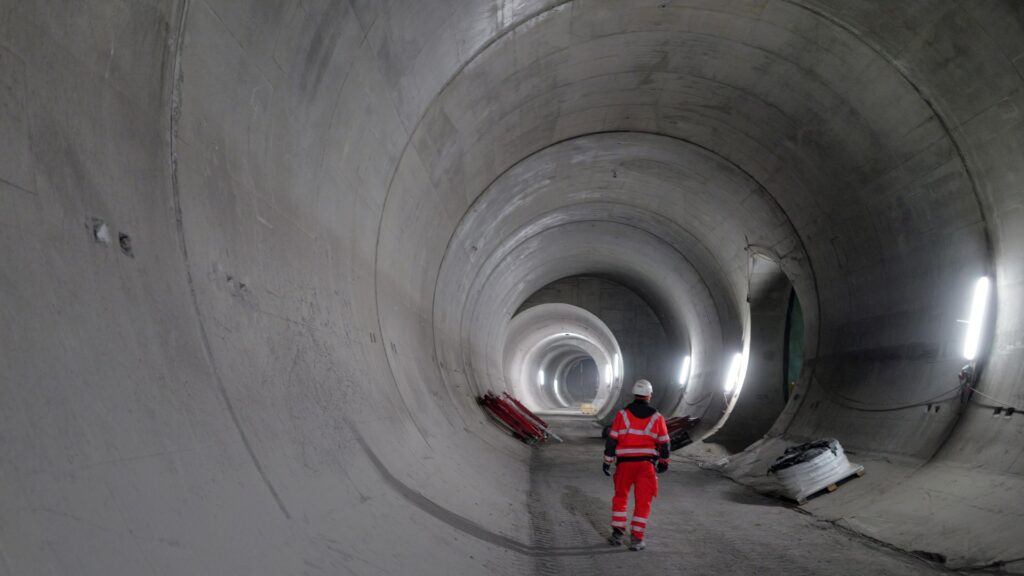
Dublin’s planned automated north-south metro has moved into the market. TII has invited bidders to compete for the M500 package, the programme’s largest contract, estimated at around €7.3bn. It covers trains, signalling, track, systems and the fit-out of 16 stations, with roughly seven years of works ahead of a 25-year operating period. The tunnelling and enabling packages are being procured separately, and between them the programme’s contract notices now run well beyond €15bn.
For contractors and the supply chain, the message is clear, as MetroLink is moving from planning to delivery and the demand for skilled people will follow.

Easier to enter than you might think
Many UK firms assume Brexit made Irish work complicated. In practice, the route is open. Under the EU-UK trade agreement, UK firms can still bid for Irish public contracts on the same terms as EU firms. British employees have the right to live and work in Ireland under the Common Travel Area, and UK firms can bid through their existing UK entity or branch, or set up an Irish subsidiary.
The insight: the best-prepared contractors will win
Ireland’s ambition is large, and delivering it will take people. Industry estimates say Irish construction, which currently employs more than 177,600 workers, needs to add between 95,000 and 110,000 more, or roughly 25,000 a year to deliver the planned investment to 2030.
For contractors, this changes the question. Winning a tender is only the start. The firms that thrive will be those that bring a clear workforce plan to the table, covering skilled trades, compliant documentation and the ability to mobilise quickly. Clients notice contractors who can show how they will deliver, not just what they will price.
Why working across both markets pays off
The UK and Irish markets move at different speeds, and that is an advantage. Glenigan forecasts UK civil engineering activity rising by 15% in 2027, with water, energy and transport all expected to contribute. A business and workforce that can operate on both sides of the Irish Sea is more resilient and more flexible, with more places to deploy skilled people.
Where AA Euro Group fits
AA Euro Group sources skilled trades and labour workforces for civil engineering and construction, and we are based in both the UK and Ireland.
That dual presence means we understand each market’s compliance requirements, availability and expectations. For a UK contractor entering Ireland, we offer a ready route to skilled people without having to build a recruitment operation from scratch. For contractors already working in both markets, we can help move teams to where the work is.
Proven on the biggest projects
Our experience comes from some of the most demanding infrastructure projects in the UK and Ireland, including Hinkley Point C, HS2 and a number of ongoing large scale infrastructure project happening across Ireland. These projects demand strict safety standards, tight programmes and workforces that perform at scale, and that experience shapes how we support clients today.
Planning your move into the Irish market, or scaling up a project you already have there?