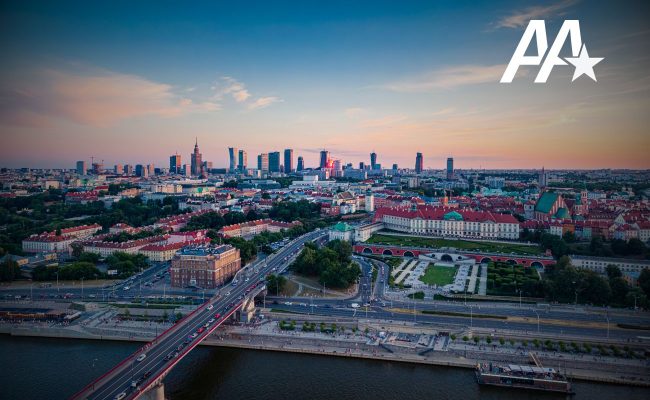
Country Spotlight – Poland
Poland has cemented its position as one of the most dynamic economies in the European Union. Strong domestic demand, EU-funded investment and a rapid shift towards clean energy are transforming its economic landscape.
For employers, investors and skilled professionals in construction, M&E, and renewable energy, Poland is now a strategic market, not just a “low-cost” location, but a key engine of EU growth.
Economic Performance & Labour Market
Poland’s growth story in 2025–2026 is underpinned by three main drivers:
-
-
Strong domestic consumption: supported by rising real incomes and robust wage growth.
-
EU-funded public investment: especially in transport, digital infrastructure and energy transition.
-
Industrial and services expansion: from manufacturing and logistics to IT and shared services.
-
At the same time, labour costs are climbing. A labour cost index of 163 points in Q2 2025 (more than double the long-run average) and continued wage increases underscore the competition for talent. For employers, this means that access to specialised skills, not just cheap labour – is now the decisive differentiator.
Quick Facts & Macro Snapshot (2025)
Source: Worldometer
Sources: Economy and Finance, OECD
Source: Economy and Finance
Source: Gov.pl
Source: Gov.pl
Construction & Infrastructure
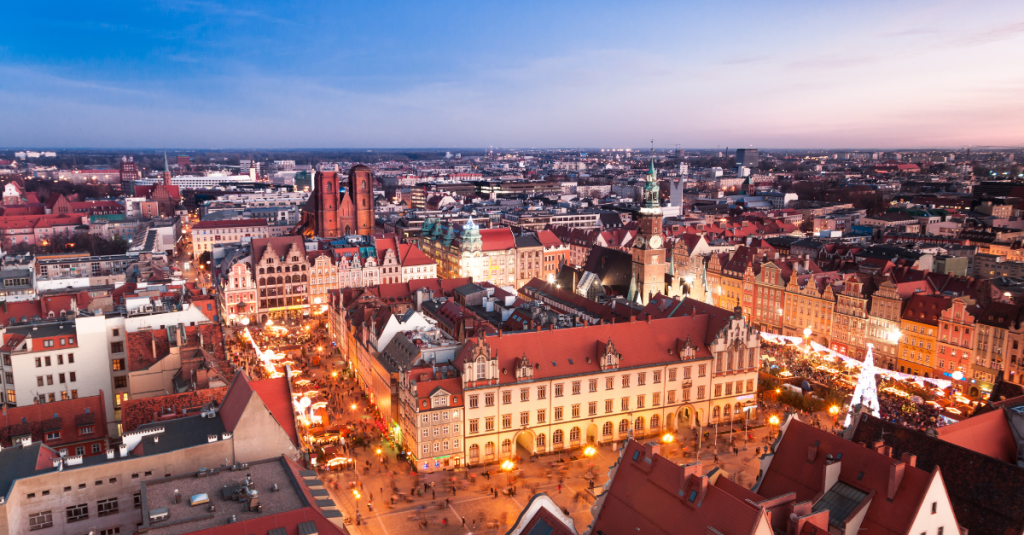
Poland’s construction and infrastructure sector is experiencing robust growth, driven by EU-funded investment, private sector expansion, and large-scale urban regeneration projects. Residential, commercial, and industrial developments are transforming key cities, while transport, energy, and logistics projects continue to strengthen Poland’s strategic position in Central Europe.
Key Development Highlights
–Major Road & Rail Upgrades
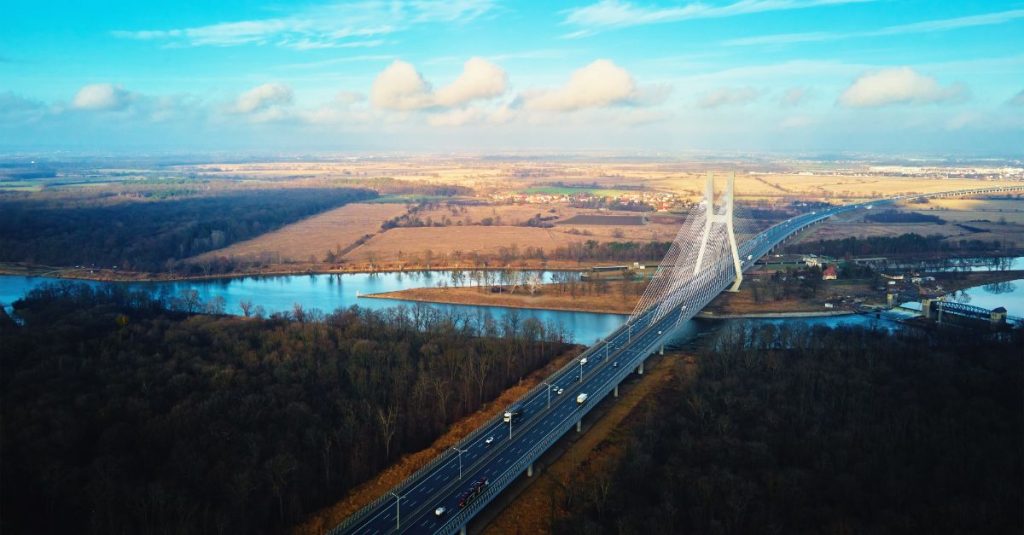
Projects such as the S7 Expressway expansion, A1 motorway improvements, and the Warsaw–Gdańsk high-speed rail upgrade are enhancing connectivity, reducing congestion, and supporting regional economic growth.
–Urban Regeneration Initiatives
In Warsaw, the Praga district redevelopment, Kraków’s Nowa Huta revitalisation, and Wrocław’s Biskupin mixed-use renewal are transforming former industrial areas into modern residential, office, and leisure spaces.
–Residential Expansion
Large-scale housing developments include Warsaw’s Miasteczko Wilanów, Kraków’s Nowe Dębniki, and Gdańsk’s Oliwa residential districts, providing both private apartments and affordable housing solutions.
–Commercial Development
Office and logistics projects, such as Logicor and Panattoni warehouse parks, as well as high-end office towers in Warsaw’s business districts, are responding to the growing demand from e-commerce, tech, and service industries.
–Industrial & Technology Parks
The Katowice Special Economic Zone, Łódź Technology Park, and Poznań Innovation Hub support manufacturing, R&D, and tech-driven enterprises, integrating Poland into European and global supply chains.
–Green Construction & Sustainability
Initiatives such as eco-friendly residential complexes, BREEAM-certified office buildings, and energy-efficient public infrastructure in cities like Gdańsk and Wrocław reflect Poland’s focus on sustainable construction aligned with the EU Green Deal.
For construction and QS professionals, this translates into sustained demand for:
- Quantity Surveyors and Cost Managers
- Project Managers & Site Managers
- Civil, Structural and M&E Engineers
- HSEQ & compliance professionals
With higher input costs and stricter ESG requirements, clients are increasingly looking for talent that can manage cost, risk and sustainability in tandem.
Poland’s Energy Transition: From Coal Heavyweight to Clean-Energy Leader
Perhaps the most striking story is Poland’s accelerated energy transition.
Renewables Overtake Coal
In June 2025, Poland generated more electricity from renewables (44.1%) than from coal (43.7%) for the first time ever, a symbolic turning point in one of Europe’s most coal-dependent systems. Across the second quarter of 2025, fossil fuels accounted for less than half of electricity generation for the first time on a quarterly basis, highlighting the country’s rapid shift towards cleaner energy sources.
Solar and Wind Lead the Charge
By April 2025, Poland had 22.1 GW of installed solar PV and 10.9 GW of onshore wind, according to the national grid operator PSE. Solar PV alone accounted for around 64% of total renewable energy capacity and contributed approximately 31.5% of renewable power generation in early 2025.
This rapid build-out is now creating “good problems”: grid congestion and PV curtailment are on the rise, with roughly 600 GWh of PV output curtailed in the first half of 2025, pushing the market toward storage, demand-side response and electrification of heat.
Policy Shifts – Wind, Grid & Nuclear
Poland’s policy framework is pivoting decisively toward clean power:
- In mid-2025, parliament approved a liberalisation of onshore wind rules, reducing distance constraints and simplifying permitting for new wind projects. Reuters
- The government and grid operators are investing heavily in transmission upgrades to handle higher renewable penetration and future offshore wind and nuclear connections. Financial Times+1
- In December 2025, the European Commission approved a major state-aid package for Poland’s first nuclear power plant, a ~3.75 GW facility on the Baltic coast to be built with Westinghouse and planned to start operations in the second half of the 2030s. European Commission+1
Manufacturing & M&E
Poland Moves Up the Value Chain
Poland’s industrial base is evolving from traditional heavy industry to higher‑value, technology‑rich manufacturing, with global companies establishing or expanding advanced facilities:
- Automotive & EV value chain: LG Energy Solution operates one of Europe’s largest lithium‑ion battery factories near Wrocław, supplying major OEMs such as Audi, BMW and Ford. The Swedish battery maker Northvolt has expanded battery assembly capacity in Gdańsk, and IONWAY (a Volkswagen PowerCo & Umicore joint venture) has selected Nysa for a new cathode materials plant. South Korea’s POSCO International has completed an EV motor core plant in Poland, and Taiwanese Compal Electronics is building an automotive electronics facility in Czeladź. German‑based BorgWarner also relocated combustion‑engine component production to Jasionka near Rzeszów.
- New greenfield investments: American battery materials firm Ascend Elements is investing over €1 billion to complete a cathode precursor materials plant, creating hundreds of jobs and strengthening Europe’s EV battery supply chain. Spanish company Windar Renovables is building a wind‑turbine components factory in Szczecin, supporting renewable‑energy equipment production.
- Electronics & advanced manufacturing: Swedish EMS provider Scanfil is expanding its Sieradz facility, and GARO opened a new production and logistics centre in Szczecin. A growing number of electronics and industrial equipment businesses are scaling up to serve both domestic and export markets.
These developments are increasing participation in European value chains for e‑mobility, automation and green‑tech equipment, and boosting demand for skills in automation, maintenance, EHS, cost engineering and multi‑country project control — as labour costs rise and productivity‑enhancing expertise becomes even more valuable.
Talent, Wages & Competition: What 2026 Will Look Like
For Employers, By 2026, Poland is expected to:
- Lead the EU in GDP growth (~3.4% forecast).
- Continue major investment in energy, defence, infrastructure and digitalisation.
- Face ongoing pressure on public finances, with budget deficits above EU limits and sustained defence and social spending.
Practically, this means that skills shortages will remain acute in engineering, construction management, M&E, and energy. Wage growth is expected to stay above inflation for in-demand roles, particularly for bilingual candidates and those with international project experience, while competition for talent will intensify across sectors, from energy to advanced manufacturing and tech.
For Candidates:
- Long-term project work in infrastructure, industrial and clean-energy sectors.
- Opportunities to step into lead roles earlier than might be possible in more mature Western European markets.
- The chance to gain deep experience in the practical side of energy transition, from coal-to-renewables grids to large-scale PV and future nuclear.
For employers, the key challenge will not be finding projects, but finding and retaining the talent to deliver them. For professionals in construction, engineering, M&E and renewable energy, Poland is becoming one of Europe’s most interesting markets to build a career.
Why Choose AA Euro Group in Poland
AA Euro Group is already established and operational in Poland, delivering specialist recruitment solutions across construction, M&E, engineering, and renewable energy. With our local team led by Ray Mahon, we combine deep market knowledge, proven sector expertise, and access to top-tier talent.
We help clients navigate a competitive labour market, providing skilled professionals who meet both technical and compliance standards, ensuring projects are delivered efficiently and successfully.