
Fixed-Term Employee vs Contractor: Which Is Right for Your Business?
When your business needs additional support, you typically have two main options: hiring someone on a fixed-term contract or engaging a contractor.
While both provide temporary solutions, they operate in very different ways. Understanding the distinctions can help you choose the right approach for your business.
What Is a Fixed-Term Contract?
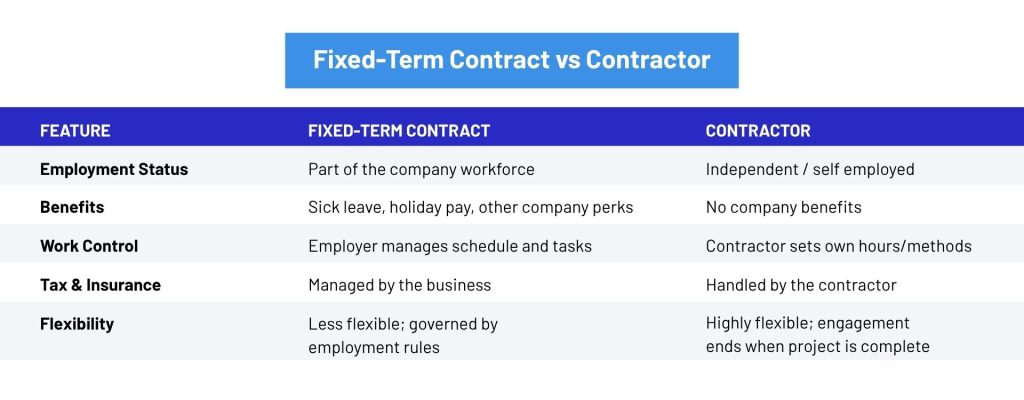
A fixed-term contract is an employment agreement where an individual is hired for a set period to cover temporary needs, such as maternity leave, seasonal workload, or a specific project. These contracts can last from a few months up to a couple of years.
Employees on a fixed-term contract usually work like permanent staff and may be entitled to benefits such as annual leave, sick leave, and other company perks. Businesses often use fixed-term contracts to fill temporary gaps, manage high-demand periods, or access skills that aren’t required long-term.
At the end of the contract, the business can choose to extend the agreement, offer a permanent role, or conclude employment.

What Is a Contractor?
A contractor is an independent professional hired to complete a specific task or project. Unlike employees, contractors are self-employed, manage their own taxes, insurance, and tools, and set their own working hours.
Contractors do not receive employee benefits such as paid leave or sick pay. They charge for their time or deliverables, and their engagement ends once the project is complete. Contractors are ideal for businesses that need flexible, specialist skills without the administrative responsibilities of hiring an employee.
Benefits of Being an Employee vs a Contractor
Choosing between employment and contracting comes down to stability, flexibility, and financial preferences. Here’s a simplified overview of the key advantages of each option:
Benefits of Being an Employee
- Stable Income: Employees receive a guaranteed wage-hourly, weekly, or monthly, making earnings predictable. Overtime is compensated, and work-related expenses are covered by the employer.
- Tax & Benefits: Tax is handled through the PAYE system, with income tax, PRSI, and USC automatically deducted. Employees often receive additional perks such as healthcare, company vehicles, or mobile phones.
- Pension Access: Employees can access employer-supported pensions or PRSA contributions, and they receive paid holidays, sick leave, and may qualify for illness benefits.
- Liability Protection: Employers must provide a safe working environment and cover liability insurance, protecting employees from injury-related costs.
- Job Security: Employees have stronger legal protections, including rights under the Unfair Dismissals Act.
Benefits of Working as a Contractor
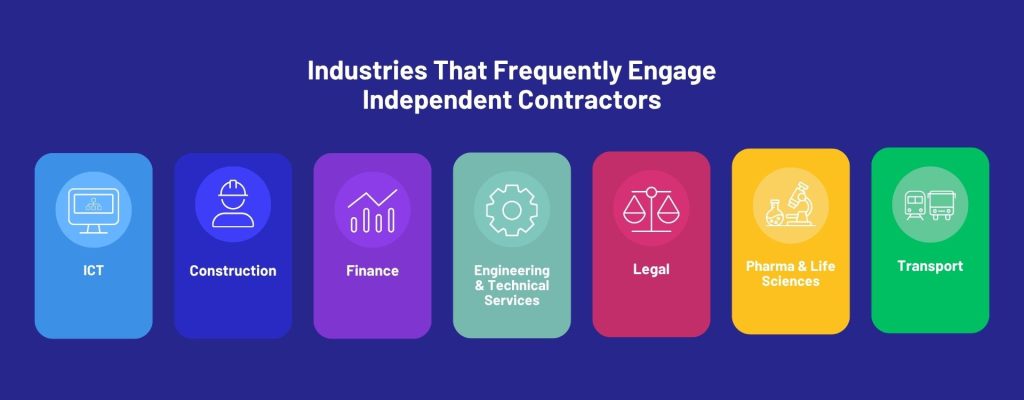
- Higher Earning Potential: Contractors often command higher rates, especially when offering specialist skills, though they must account for their own expenses and lack of benefits.
- Flexibility: Contractors can choose projects, work with multiple clients, and enjoy breaks between contracts—offering more control over their schedule and career path.
- Tax Structure Options: Contractors can operate as sole traders, through a limited company, or via an umbrella company. This flexibility allows for tailored tax planning, pension funding options, and the ability to benefit from credits like the Earned Income Tax Credit (EITC).
Which Option Is Right for Your Business?
- Fixed-term contract: Best for situations where you need someone to integrate fully into your team for a defined period. Provides stability and ensures availability when required.
- Contractor: Ideal for short-term projects or specialised work where flexibility is key. Contractors offer expertise without the obligations of permanent employment.
Both solutions have advantages depending on your business needs. Choosing the right type of hire can save time, reduce costs, and ensure the right talent is in place.
4 Key Considerations When Choosing Between Employees and Contractors
Deciding whether to hire a permanent employee or a contractor depends on your business needs, resources, and long-term goals. Here are four quick factors to evaluate:
-
Role Duration
If the role is tied to a specific project with a clear end date, a contractor is often the best fit. For ongoing tasks that add long-term value, a permanent employee may be more suitable. -
Skills & Objectives
Consider the skills, experience, and qualifications required. If significant training is needed, a permanent hire may be worthwhile. For specialist expertise that’s ready to go, contractors offer immediate impact. -
Scalability
Businesses with fluctuating workloads benefit from contractors who can be brought in as needed. If your workflow is consistent year-round, permanent employees may offer better continuity. -
Business Growth Stage
Growing companies may prefer building a strong in-house team through training and development. If resources are limited, bringing in expert contractors can fill skill gaps quickly and efficiently.
Looking for professionals to join your team? AA Euro Group can help you find the right people, whether you need fixed-term employees or skilled contractors. Get in touch today!